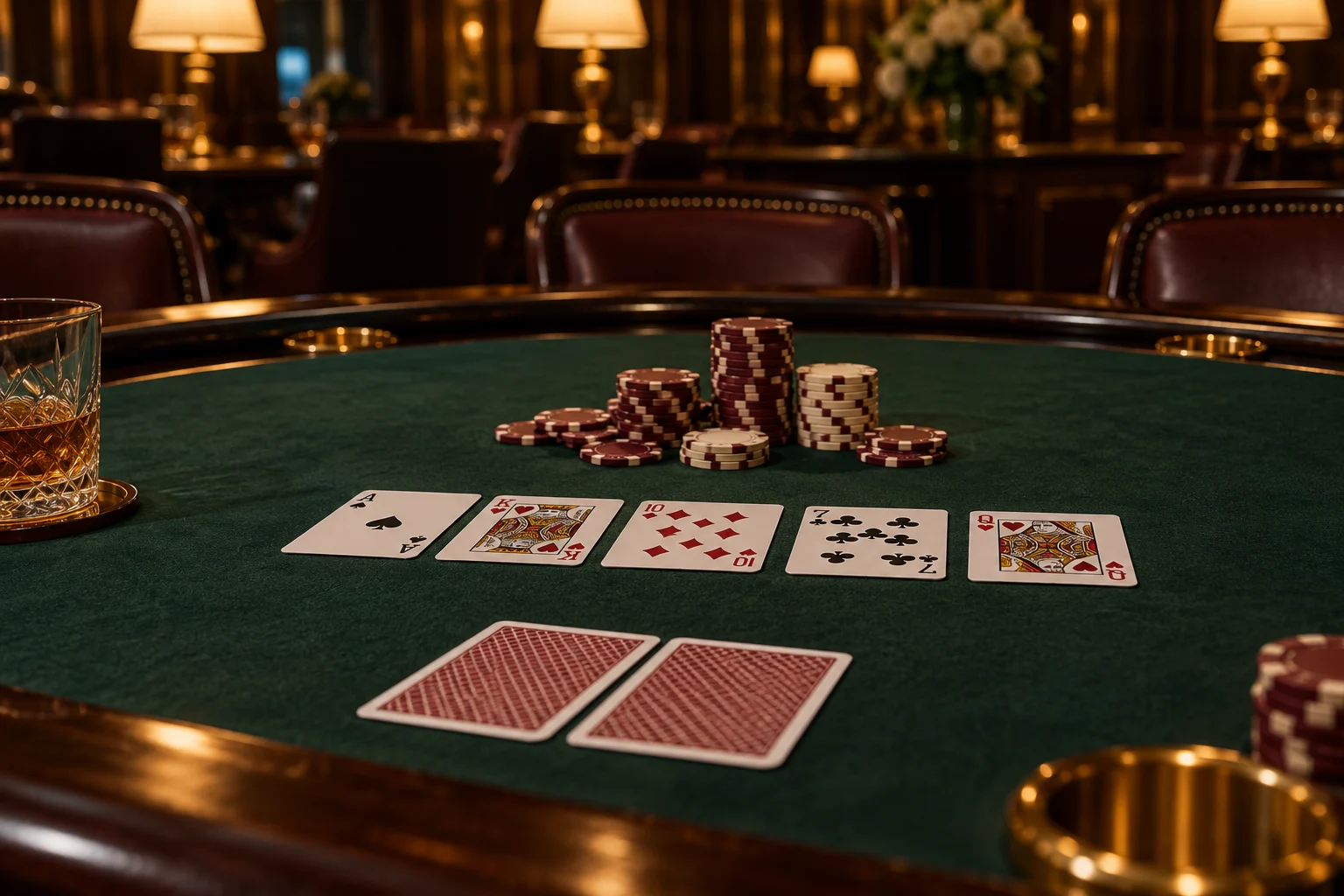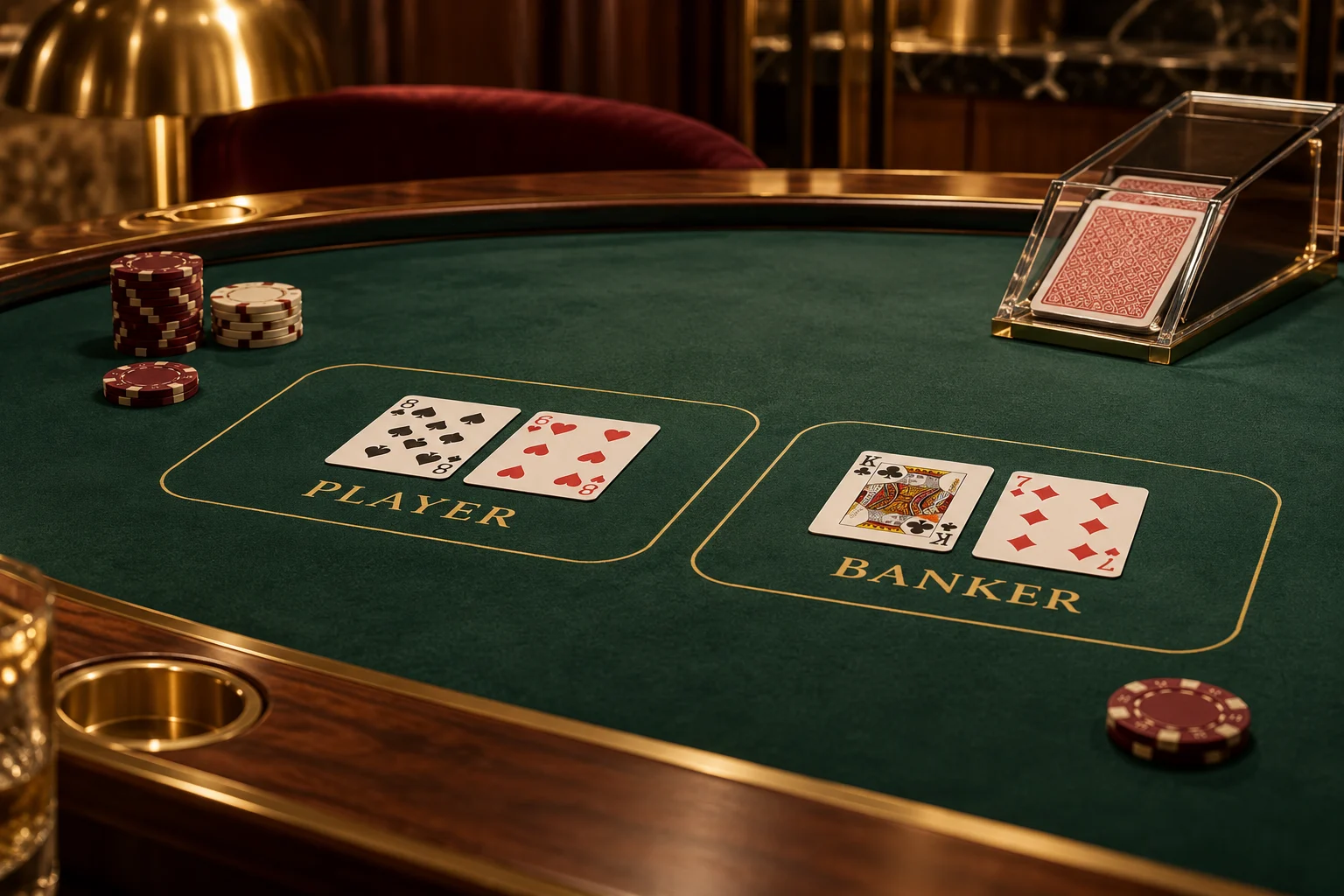
Blackjack is a card game in which each player’s hand is compared with the dealer’s hand under the table’s rules. The familiar goal is to get close to 21 without going over, while beating the dealer. Learn the common terms, choices and etiquette before taking a seat.
- Format
- Card game
- Goal
- Beat the dealer without busting
- First check
- Table rules and limits
The basics of a hand
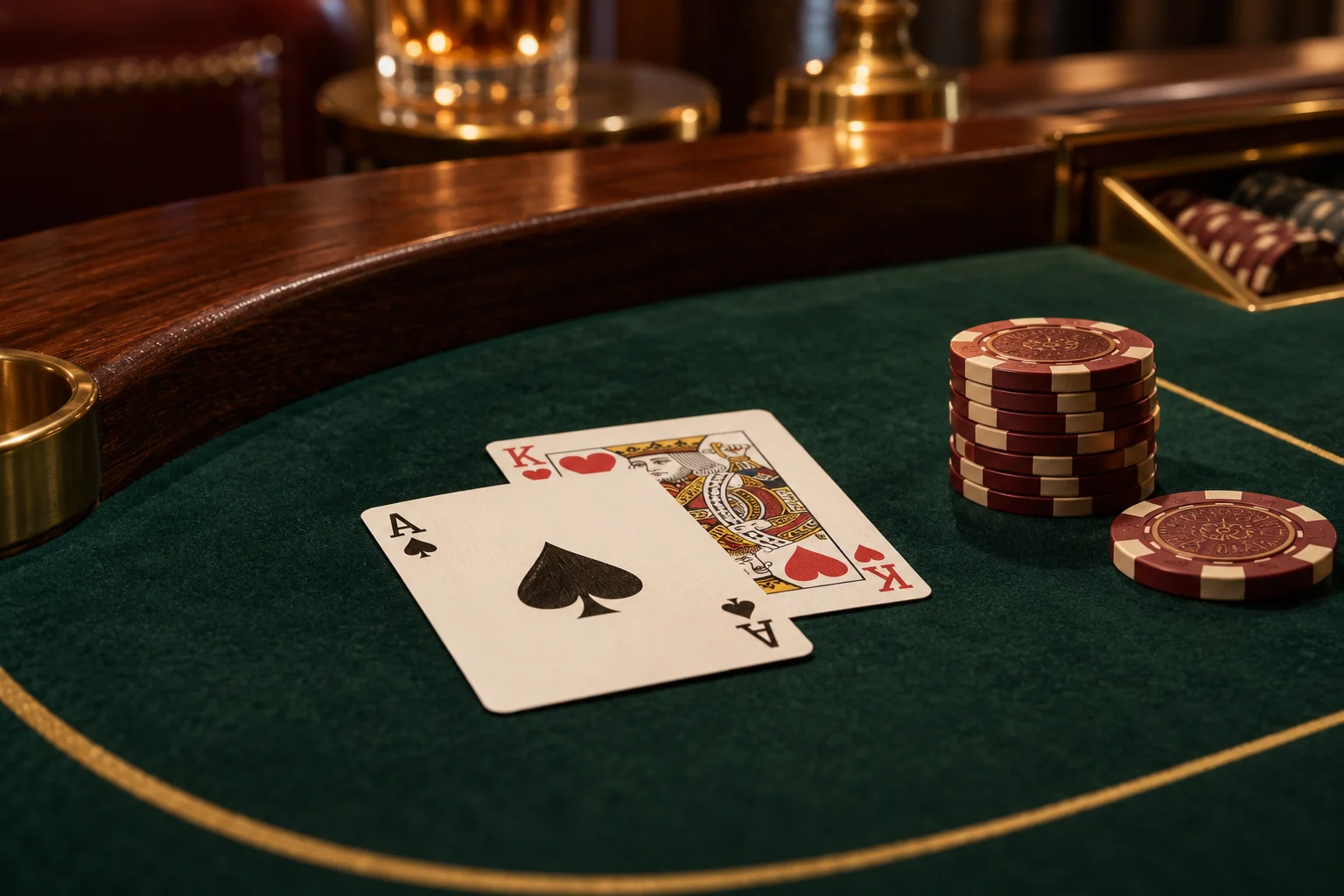
Number cards usually count at face value, face cards count as ten, and an ace can count as one or eleven under standard rules. Going over 21 is called a bust. A blackjack is typically an ace and a ten-value card as the first two cards; its payout and other conditions depend on the table.
After initial cards are dealt, players make permitted choices and the dealer completes the hand according to prescribed rules. The dealer then settles each hand. A winning, losing or tied result depends on both hands and the posted conditions.
Common decisions
To hit means to request another card; to stand means to take no more cards. Some tables also permit doubling down or splitting pairs in specified circumstances. These options can require an additional wager and may have restrictions, so ask how they work before making a decision.
The dealer does not make personal decisions in the same way a player does: the table rules specify when the dealer takes another card or stands. Details such as the dealer’s treatment of a soft 17 can vary and are worth checking in the posted rules.
At the table
Look for the table minimum and maximum, and confirm the payout for blackjack and the rules for any optional wagers. Exchange money for chips as directed by the dealer. Many tables use hand signals for decisions; ask the dealer to demonstrate them so the action is clear to everyone.
Keep your cards and chips where the dealer can see them and follow instructions about handling cards. Wait until a hand is complete before joining if the table requires it. A dealer can explain the procedure, though they cannot predict the cards.
Playing within a visit
Blackjack combines chance with decisions, but no decision removes the possibility of losing. Optional side bets have their own terms and are separate from the main hand. Read their conditions instead of assuming they pay or behave like the main wager.
Set a budget and a time limit that fit your plans before you sit down. You can pause or leave according to the venue’s procedures. Game availability, limits and local age requirements differ; confirm details with the venue.
Blackjack questions
What does bust mean?
A hand exceeds 21 and busts under standard blackjack rules.
What is a hit?
A request for another card, subject to the table’s rules.
Do all tables pay the same?
No. Payouts and rules can vary; read the posted conditions.
General rules and etiquette. Table-specific rules take precedence. Editorial reference: OLG PlaySmart.